Decide who you are recruiting
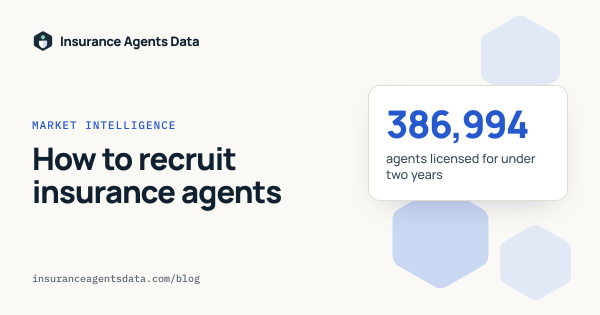
Recruiting works best with a narrow target. Newly licensed producers want training, leads and a contract; experienced ones want better compensation, products or support. In the current snapshot 390,246 agents have been licensed for under two years (newly licensed agents) and 479,330 for ten years or more (experienced agents).
Then pick the line. 1,062,034 records carry life and health authority and 474,646 property and casualty (life & health or property & casualty). An IMO placing annuities wants the 462,425 annuity-authorized agents, not every producer in a state.

Where recruiters find licensed agents
Referrals from producers you already have are the cheapest source and usually the best fit. Pre-licensing classes and new-agent programs reach people before anyone else contracts them. LinkedIn, job boards and industry association events find agents who are already looking.
A licensed-agent list covers the people who are not looking yet. It gives every producer in a state or the country with their license type, lines of authority, years licensed and, where available, a business email and phone, so you can filter to the agents who match the role and start the conversation yourself. Our state packs and nationwide file are built for exactly this; agency recruiters explains which columns to filter on.
Reach out the right way
Write to one agent at a time, about one role, and say who you are. US commercial email law requires an honest sender and subject line, a physical postal address and a working way to opt out, with opt-outs honored within ten business days. Keep a suppression list, and remove anyone who asks.
Phone outreach to business numbers is common in recruiting, but check the rules for the channel you use, and keep calls to business hours. A short first message that names the product line, the territory and one concrete reason to talk does better than a long pitch.
Pitch what each group needs
New agents compare training, lead programs, mentorship and how fast they can write their first policy. Experienced agents compare contract levels, carrier access, back-office support and who owns the book. Lead with the one your segment cares about.
Measure, then widen
Start with one state or one segment, track replies and appointments per hundred contacts, and only then widen. A state pack is enough to test a message; the nationwide file is cheaper once you recruit in many states.